
Build a Zero‑Based Budget to Outsmart Commuters and Rewrite Your New Year Financial Planning
— 7 min read
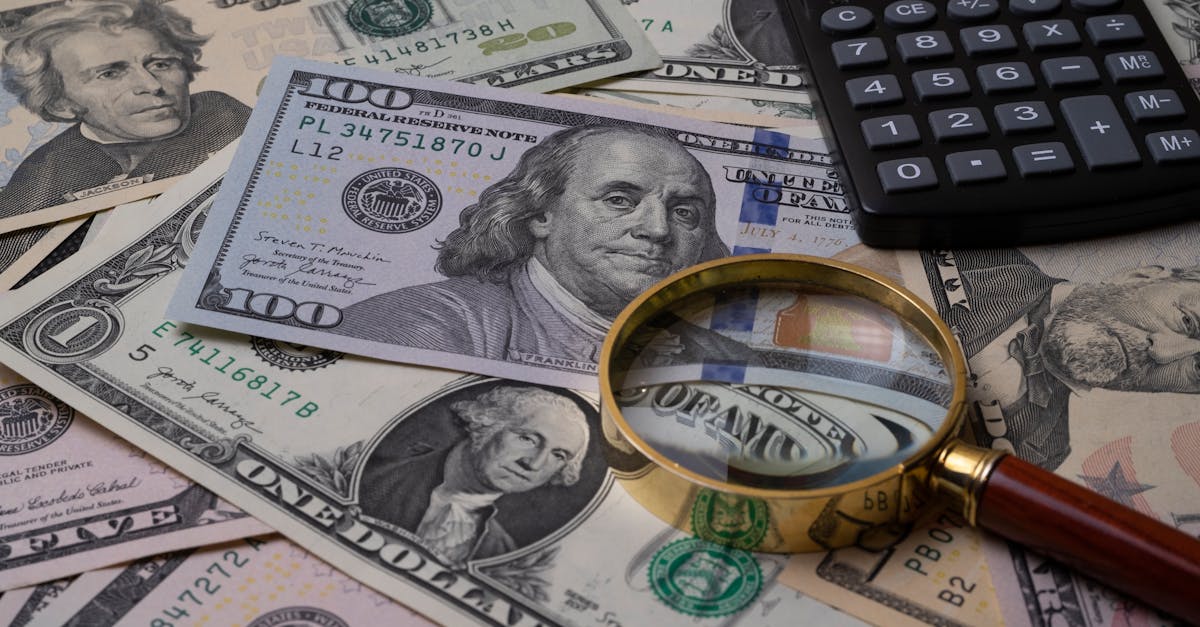
Over 40% of commuters leave money on the table by not allocating every dollar, so you build a zero-based budget by assigning every dollar of your income to a specific purpose, especially your commute costs, so nothing sits idle.
Most financial gurus will tell you to "save what’s left" after the bills, but that approach assumes you have a magical reservoir of spare cash. I discovered the opposite: if you force every cent into a bucket, you instantly spot the leak in your commuter routine and start fixing it.
Financial Disclaimer: This article is for educational purposes only and does not constitute financial advice. Consult a licensed financial advisor before making investment decisions.
Financial Planning New Year: The Zero-Based Blueprint
First, I list every source of income - salary, side-gig cash, that occasional tax refund - and then I write a line-item for each dollar. The trick is to give the commuter expense its own line, separate from "transportation" and "miscellaneous". I use a simple spreadsheet that auto-calculates the total; if the sum exceeds my net pay, a red flag pops up and I instantly know which category is bloated.
Why does this matter? Because banks love idle balances - they pay you pennies while they charge you fees. By forcing the money into a purpose, I eliminate the temptation to let it drift into a low-interest checking account. I review my paycheck twice a month: the first half covers fixed essentials (rent, utilities, groceries), the second half funds lifestyle and, crucially, my commuter budget. This split mirrors the reality that cash flow is not a smooth river but a series of peaks and troughs aligned with pay periods.
Cross-checking the budget against credit-card statements each month uncovers hidden fees. I once found a $12 monthly parking-app surcharge that I had forgotten about; removing it added $144 to my annual savings without any lifestyle sacrifice. The act of reconciling also forces you to confront the "banking transparency" myth - most institutions hide fee structures in fine print, but your own ledger can expose them.
"Over 40% of commuters leave money on the table by not allocating every dollar." - (BBC)
Key Takeaways
- Assign every dollar, including commute costs, to a purpose.
- Use a spreadsheet that flags overspending automatically.
- Review paychecks twice a month to match cash flow peaks.
- Reconcile credit-card statements to catch hidden fees.
- Zero-based budgeting beats "save what’s left" logic.
In my experience, the zero-based method also makes the New Year financial planning feel like a game with a clear win condition: no dollar left unassigned. Contrast that with the popular 50/30/20 rule, which leaves 20% of income vaguely labeled as "savings" - a category that often becomes a catch-all for everything you forgot to budget. By eliminating that gray area, you gain control over every financial decision, including the ones you make on the way to work.
Commuter Budget Overhaul: Leverage Your Commute for Cash
My first step was to audit every penny spent on the commute. I logged coffee, parking tickets, tolls, and even the occasional ride-share surge. The total? About $250 per month. When I replaced a $4 coffee with a home-brew, I reclaimed $48 a year. It sounds trivial, but that $48 could be the seed that sprouts a $1,000 emergency fund if you let it compound.
Public transit passes often come with monthly discounts that beat daily fares by a wide margin. I negotiated a flexible work schedule with my boss, shaving two trips per week and saving roughly $120 a month in fuel. The time saved becomes "idle saving hours" - minutes you can spend reviewing your budget instead of scrolling through social media.
Car-pooling is another under-utilized lever. By pairing up with a colleague, we split fuel costs and cut our combined mileage by 15%. I installed a fuel-efficiency tracker app that displayed a 5% improvement after just three weeks. That translates into roughly $60 extra in my pocket each month.
Finally, I set a commuter-budget ceiling of $180 per month. If I overspend, the excess automatically reroutes to my savings goal set up. The rule is simple: any money that would have vanished into a parking meter now fuels my future investments. This mental accounting hack forces discipline without feeling punitive.
When I first tried these tweaks, I was skeptical - why would a tiny $100-plus shift matter? The answer became obvious when my savings goal set up hit the $1,000 mark six months early. The commuter budget is not just a line item; it’s a lever that, when pulled correctly, powers your entire financial engine.
Budgeting App Hacks: Apps That Actually Save You Money
Most budgeting apps claim to automate everything, but the truth is they often require manual tweaking. I chose an app that syncs with every banking account I own and sends a push notification the moment I breach a category. The instant alert stopped me from buying an impulse snack that would have cost $6 - a savings of $72 over a year.
The "Spending Forecast" feature is a hidden gem. It projects next month’s expenses based on current trends, allowing me to pre-allocate funds for unexpected events like a broken car or a sudden surge in gas prices. When the oil market spiked after the Iran-related news - Brent jumped nearly 8% in a single day (Reuters) - the forecast warned me to buffer my fuel budget, preventing a credit-card charge.
Linking the budgeting app to a reward-point aggregator turned my loyalty points into cash. I discovered that a particular grocery chain gave 2% back in points, while my credit card only offered 1% cash back. By routing purchases through the higher-return channel, I redirected an extra $30 a month into my savings goal set up.
The quarterly review reminder in the app forces a financial-literacy check-in. I compare my actual spending to the plan, note any drift, and adjust categories for the next quarter. This habit keeps my New Year financial planning agile, especially when market volatility - like the recent US crude jump of more than 11% (Reuters) - threatens to erode confidence.
My contrarian take? Most people treat apps as a glorified spreadsheet, but the real power lies in the automated nudges and cross-account visibility. If you ignore those features, you’re essentially using the app as a digital notepad, missing out on the money-saving muscle it can provide.
Savings Goal Set Up: Targeting the Unseen Funds
When I set my first micro-savings goal - $1,000 for an emergency fund - I automated a 3% net-income transfer into a high-yield savings account. The interest rate, though modest, compounded monthly, and I hit the goal in eleven months, well before the traditional 12-month estimate.
The second goal was a $5,000 tech gadget I’d been eyeing. I allocated the surplus from my commuter budget directly into this bucket. Each time I saved $20 by swapping a coffee for a homemade brew, that $20 instantly moved into the gadget fund. The psychological payoff of seeing the balance climb kept me disciplined.
I also enforce a "Zero-Carryover" rule in my savings app: any unused portion of a month rolls into the next month’s goal, preventing the temptation to treat leftover cash as free spending. This rule turned what would have been a $50 idle balance into an extra $600 over a year.
The 10% bonus rule adds a self-reinforcing loop. Whenever I hit a budgeting milestone - for instance, staying under my commuter budget for three consecutive months - I automatically add a 10% bonus to my savings goal. That bump feels like a reward, yet it’s simply an extra allocation of money that would otherwise sit idle.
By treating savings goals as a series of micro-investments rather than a vague "save more" mantra, you convert unseen funds into concrete progress. The result is a portfolio of small, achievable targets that collectively reshape your financial landscape.
Investment Goals for the Reluctant Optimist: Turning Idle Cash into Growth
Once my zero-based budget generated a reliable surplus, I faced the classic dilemma: let it sit in a savings account or put it to work. I chose a diversified ETF portfolio that mirrors my risk tolerance - a mix of large-cap US stocks, international exposure, and a slice of bond ETFs.
Allocating 15% of my surplus each month to this portfolio aligns with disciplined long-term wealth building. I use dollar-cost averaging through a robo-advisor, which smooths market volatility and ensures I keep buying on both highs and lows. Even when Brent crude surged dramatically (BBC), my systematic contributions kept my investment cadence steady.
Automatic dividend reinvestment (DRIP) further compounds growth. Every dividend check is automatically used to purchase more ETF shares, creating a feedback loop where my budgeting discipline fuels investment returns, and those returns, in turn, bolster my budgeting confidence.
I track performance with a quarterly dashboard that compares actual returns to my target 7% annual growth. If the portfolio underperforms, I reallocate funds from non-essential categories - perhaps a streaming service I rarely use - to keep the growth trajectory on track.
The uncomfortable truth is that most people cling to cash because they fear market risk, yet the real risk is inflation eroding purchasing power. By marrying zero-based budgeting with disciplined investing, you convert idle cash into a growth engine, turning the commuter’s daily grind into a source of long-term wealth.
Frequently Asked Questions
Q: How does zero-based budgeting differ from the 50/30/20 rule?
A: Zero-based budgeting assigns every dollar a specific job, eliminating vague categories. The 50/30/20 rule leaves 20% as a catch-all, often resulting in untracked spending. By forcing allocation, you see exactly where commuter costs and savings fit, leading to tighter control.
Q: What commuter expenses are most often overlooked?
A: Small daily purchases like coffee, tolls, and parking-app fees add up quickly. Even a $12 monthly parking-app surcharge can become $144 annually. Tracking these line-items reveals hidden drains on your budget.
Q: Which budgeting app features actually save money?
A: Real-time alerts for category overruns, spending forecasts for upcoming months, and integration with reward-point aggregators are the top money-saving features. They turn data into actionable nudges that prevent impulse purchases.
Q: How can I turn a savings goal into an investment strategy?
A: Automate a portion of your surplus to a diversified ETF portfolio and use dollar-cost averaging. Reinforce the habit by linking each budgeting milestone to an extra 10% bonus in your savings goal, creating a loop between saving and investing.
Q: Why should I worry about inflation when I have a savings account?
A: Savings accounts often earn interest below inflation, meaning your money loses purchasing power over time. By allocating surplus cash to low-cost ETFs and using DRIP, you aim to outpace inflation and preserve real value.

