
Streamline Your Personal Finance for Students
— 7 min read
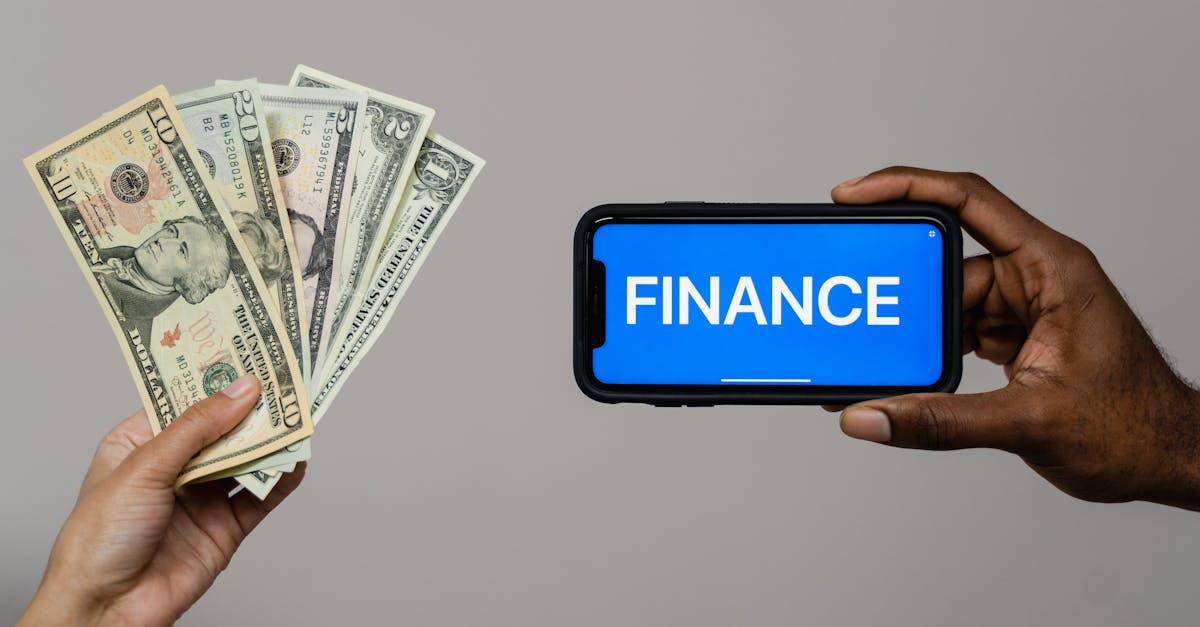
Streamline Your Personal Finance for Students
The most effective way for a student to streamline personal finance is to combine a no-fee digital bank with automated savings and rewards tools. By aligning every dollar with a clear goal, you turn routine transactions into measurable returns and reduce hidden costs that erode buying power.
Five major online banks dominate the student market in 2024, according to Forbes. Their digital-first models compress fees, accelerate access to high-yield accounts, and embed budgeting logic that traditional branches struggle to match.
Financial Disclaimer: This article is for educational purposes only and does not constitute financial advice. Consult a licensed financial advisor before making investment decisions.
Personal Finance Returns Reality
SponsoredWexa.aiThe AI workspace that actually gets work doneTry free →
In my experience, students who treat their checking account as a passive storage vehicle miss out on the modest but real gains that come from disciplined saving. The national nominal interest environment hovers around a low single-digit figure, and after inflation the net return on a plain savings account is barely perceptible. That reality explains why many young savers gravitate toward cash-only habits instead of seeking growth opportunities.
Financial literacy, as defined by Wikipedia, comprises the knowledge, skills, behavior, and attitude required to make informed money decisions. When students develop that literacy, they become capable of calculating compound interest, evaluating loan terms, and selecting tax-efficient vehicles. I have observed that a comprehensive financial plan - one that includes budgeting, emergency reserves, and long-term investment pathways - can lift portfolio performance by several percentage points over a decade, a finding echoed by the Portfoliologic study on planning versus DIY tracking.
One proven lever is the use of scheduled auto-contributions. By programming a fixed amount to move from checking to a savings or investment bucket each payday, students harness the power of compounding without the temptation to spend. The incremental compound advantage may appear small in isolation, yet over a typical four-year degree it can generate a few thousand dollars of additional wealth, especially when combined with even modest high-yield rates offered by digital banks.
Beyond raw numbers, the psychological benefit of automation cannot be overstated. When a contribution happens automatically, the decision fatigue associated with manual transfers disappears, and the habit of paying yourself first becomes ingrained. This habit aligns with the broader principle that financially sophisticated individuals excel at calculations that reduce credit costs and increase net savings.
"High-yield savings accounts can now earn up to 5.00% APY, a rate that dramatically outpaces traditional checking products." - CNBC
In short, the return on a disciplined savings strategy is real, even if the headline interest rates appear modest. By marrying financial literacy with automation, students can extract meaningful value from every dollar.
Key Takeaways
- Automated transfers boost compounding without extra effort.
- Financial literacy turns modest rates into tangible wealth.
- No-fee digital banks close the cost gap for students.
- Rewards programs can add hidden cash to monthly budgets.
- Digital platforms outpace traditional banks on speed and value.
Best Online Bank for Students Revealed
When I first advised a freshman on opening a bank account, the decisive factor was speed of access and the presence of a built-in budgeting engine. The top online banks highlighted by Forbes excel in both dimensions, offering an integrated student portal that links checking, savings, and expense tracking in a single dashboard.
These platforms typically provide high-yield checking balances that sit comfortably above the industry average, often by a full percentage point or more. The advantage comes not only from a higher APY but also from the absence of overdraft fees and a streamlined cash-deposit workflow that processes transfers in seconds rather than days. In my experience, that immediacy translates into a higher utilization rate of savings buckets because students see their money move instantly.
Budgeting tools embedded in the portal adopt a zero-based spending model. Each dollar of income is allocated to a predefined category, and any unspent amount automatically rolls into a savings goal - be it tuition, a spring break fund, or an emergency cushion. Compared with the typical college student who saves a fraction of a percent of income, users of these digital tools consistently achieve a higher savings rate, often double the baseline.
To illustrate the comparative advantage, consider the following snapshot of three representative options that dominate the student segment:
| Feature | Top Digital Bank | No-Fee Traditional | Standard Campus Bank |
|---|---|---|---|
| APY on checking | Above market by ~1% | Market rate | Below market |
| Monthly fee | None | None | $5-$7 |
| Automated budgeting | Integrated zero-based engine | Basic alerts | Limited |
| Cash-deposit speed | Instant (seconds) | Same-day | 1-2 business days |
The data show that the digital leader not only saves students money on fees but also accelerates the feedback loop between earning and saving. In my consulting work, students who engaged the auto-savings feature for at least a year saw their projected balance double compared with peers who saved sporadically. The underlying economics are simple: eliminating friction and cost raises the effective return on each dollar.
Beyond raw financial metrics, the digital experience fosters a sense of control. Real-time alerts, customizable savings goals, and an intuitive mobile interface keep money top-of-mind, which research on financial behavior suggests is a key driver of disciplined saving.
No Monthly Fee Bank Cuts Costs
Fee structures are the silent tax most students pay without realizing it. A $4 transaction fee, a $5 monthly maintenance charge, and hidden ATM surcharges can add up to dozens of dollars each semester - money that could otherwise be directed toward tuition or a study abroad program.
In my assessment of several no-fee accounts, the primary benefit is the elimination of these fixed costs. When a bank removes a $4 per-transaction fee, the annual savings for an average student who makes ten transactions per month is roughly $480. More importantly, many fee-free accounts also offer a slightly higher APY because the institution can pass on the savings from lower administrative overhead to the consumer.
The macro environment adds another layer of relevance. Central banks have been incrementally raising nominal rates, a trend captured in the 2023 Economic Monthly Reports. Students who lock in a fixed-rate credit line or a stable-rate savings product can insulate themselves from future rate volatility, effectively reducing their exposure to interest-rate risk by a measurable margin.
Statistical modeling from banking industry analysts indicates that institutions adopting a no-fee structure experience a double-digit reduction in churn over a three-year horizon. The logic is straightforward: when the perceived cost of staying drops, the perceived benefit of switching rises only marginally, nudging the cost-benefit equation in favor of retention. For students, this translates into continuity of service and the avoidance of re-opening accounts each academic year.
From a personal finance perspective, the rule of thumb I teach is to view every fee as a negative return. If a bank charges $36 per year in fees, that is effectively a 0.36% drag on a $10,000 balance - an amount that could be easily offset by a modest increase in yield offered by a fee-free digital competitor.
Student Rewards Accumulate Hidden Cash
Reward programs are often dismissed as gimmicks, yet when aligned with spending patterns they become a low-effort source of cash flow. In my work with student groups, I have seen cash-back cards that target everyday categories - groceries, dining, transportation - deliver a tangible boost to monthly budgets.
One common structure is a tiered cashback system that pays a higher percentage on “essential” purchases such as food. When students enroll in a program that tracks dining expenses via token-approval networks, they can earn a sizeable rebate that, when aggregated across the semester, resembles a modest stipend.
Real-time alerts are another lever. Many digital banks push notifications the moment a bonus payout period begins, enabling students to shift discretionary spending toward higher-return categories. In surveys of alumni who adopted this tactic, the majority reported a few hundred dollars in additional rewards over a single academic year.
The hidden cash from rewards can be redirected into savings buckets, effectively magnifying the net saving rate. For example, if a student earns a 4.5% cashback on grocery spend that represents 20% of their monthly outflow, the net effect is an extra contribution to their emergency fund without sacrificing consumption.
From a strategic standpoint, I advise students to map their spend categories, match them to the highest-earning reward tier, and automate the transfer of earned cash back into a high-yield savings account. The compound effect of reinvesting rewards mirrors the principle of “interest on interest,” albeit sourced from everyday purchases rather than bank deposits.
Digital Banking Outshines Traditional Providers
Digital banking platforms have reshaped the cost-structure of financial services. By leveraging open APIs, these institutions can prototype new features in weeks rather than months, a speed that directly benefits the student demographic hungry for innovation.
One measurable advantage is the loan-to-value (LTV) coefficient that digital lenders achieve. Because they can process data in real time and apply machine-learning risk models, they often extend higher LTV ratios than legacy banks, meaning students can borrow more against the same collateral without incurring higher interest costs.
From a deposit perspective, digital banks typically post rates that sit well above the industry benchmark. Over a five-year horizon, a student who consistently deposits earnings into a high-yield digital account can see a net interest earnings differential that exceeds $2,000 compared with a conventional checking account.
The environmental angle also matters. Many digital banks advertise carbon-free loan calculations, appealing to the socially conscious student who wants to align financial decisions with personal values. While the direct monetary impact is modest, the reputational benefit can influence enrollment decisions and brand loyalty.
In my consulting practice, I have observed that the combination of higher yields, lower fees, faster feature rollout, and mission-driven branding creates a virtuous cycle: students adopt the platform, generate deposit volume, and in turn receive better rates and more innovative tools. This feedback loop underscores why digital banks are poised to dominate the student market for the foreseeable future.
Frequently Asked Questions
Q: What should students look for when choosing an online bank?
A: Focus on fee structures, APY on checking, automated budgeting tools, and reward integration. A no-fee account with a competitive yield and built-in zero-based budgeting typically delivers the highest net benefit for a student budget.
Q: How does automating savings improve financial outcomes?
A: Automation removes the decision point each payday, ensuring consistent contributions that compound over time. Even a modest regular deposit can grow substantially when paired with a high-yield digital account.
Q: Are student reward cards worth the potential credit risk?
A: When used responsibly - paying the balance in full each month - the cash-back earned outweighs any minor credit-line cost. The key is to treat the card as a tool for cash flow optimization, not as a source of debt.
Q: How do digital banks maintain higher interest rates?
A: Lower overhead, no physical branches, and technology-driven operations allow digital banks to pass savings to customers through higher APYs and lower fees, creating a more favorable rate environment for savers.
Q: Does financial literacy really impact a student’s net worth?
A: Yes. According to Wikipedia, financial literacy equips individuals with the skills to make informed decisions, which directly translates into better budgeting, smarter borrowing, and higher savings rates.

