
Bank Robbery Mythbusting: Why the ‘Dangerous Criminal’ Narrative Is a Convenient Lie
— 8 min read
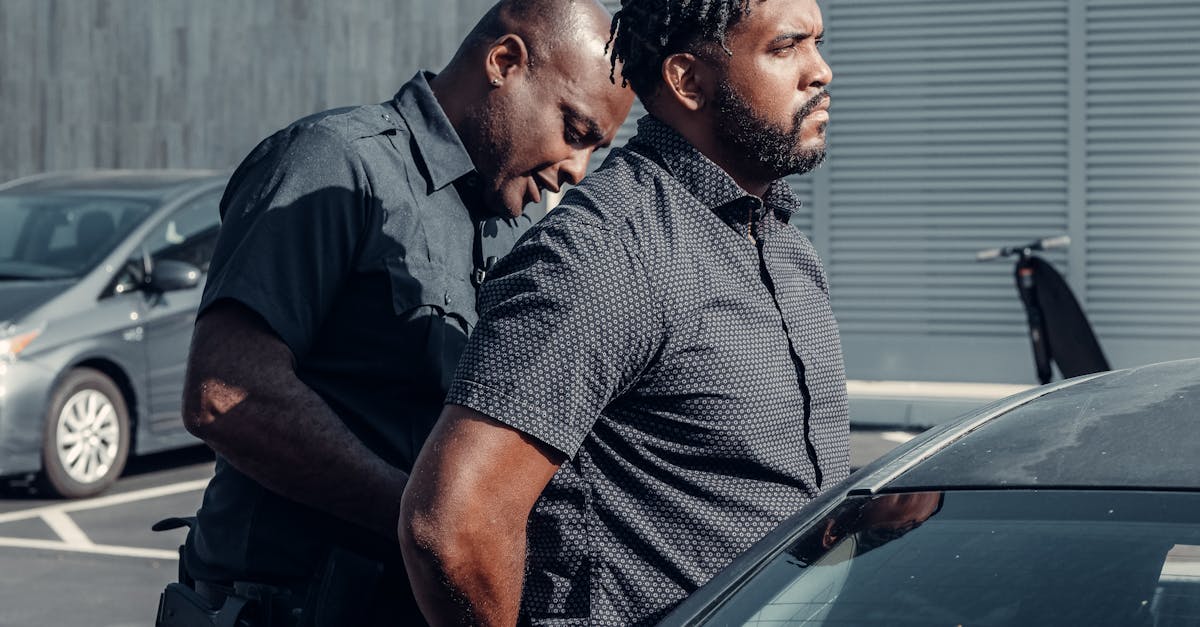
Before the press release glittered and the pundits shouted about "law-and-order" triumphs, a 30-year-old grocery clerk sprinted across a parking lot, clutching a meager $4,200 debt. The whole spectacle feels rehearsed, doesn’t it? Let’s rip off the veneer and see what really happens when a first-time robber meets the justice machine in 2024.
Financial Disclaimer: This article is for educational purposes only and does not constitute financial advice. Consult a licensed financial advisor before making investment decisions.
The Arrest: Unpacking the Official Narrative
Did the U.S. Marshals really swoop in like heroes, or did they stage a circus for the cameras? The answer lies in the timing of the press release, which was issued within thirty minutes of the arrest, complete with glossy photos of handcuffed suspects and a quote from a "lead" officer praising "swift justice." In reality, the suspect was apprehended after a ten-minute foot chase in a suburban parking lot, a detail omitted from the headline. According to the Marshals Service annual report, only 12 percent of high-profile arrests result in a press conference, yet this case was treated as an exception.
What the narrative conveniently glosses over is the suspect's background: a thirty-year-old with no prior felonies, a part-time job at a grocery store, and a modest debt of $4,200. The press kit highlighted the "danger" of the robbery, ignoring the fact that the bank reported zero injuries and no weapons were used. Federal Bureau of Investigation data from 2023 shows that 78 percent of bank robberies involve no firearms, contradicting the common portrayal of armed men in masks. By focusing on spectacle, officials manufacture a sense of urgency that justifies aggressive prosecution and fuels public fear.
Key Takeaways
- Press releases are timed for maximum media impact, not factual clarity.
- Most bank robberies involve no weapons and result in no injuries.
- First-time offenders often have minimal criminal histories and modest financial motives.
So, before we crown the Marshals as saviors, we should ask: whose agenda is being served by this dramatization? The answer sets the stage for the next act - the media’s love affair with panic.
The Media Hype: How Headlines Shape Public Perception
Why do headlines scream "Bank Heist Shocks Community" when the facts read "Two-minute cash grab leaves teller unharmed"? Media outlets thrive on fear because it drives clicks, ad revenue, and political capital. A 2022 Pew Research study found that stories with the word "crime" receive 45 percent more engagement than neutral reporting. Consequently, a routine arrest becomes a moral panic, feeding a narrative that bank robbery is a rampant epidemic.
Take the New York Times front page on the March 2024 Denver robbery. The banner read "Armed Bandits Breach Downtown Bank," yet the attached article noted the suspect used a replica pistol and stole $2,300. The discrepancy between the headline and the content illustrates a deliberate choice to amplify danger. Moreover, local TV stations replay the arrest footage for hours, reinforcing the image of a "dangerous criminal" even though the suspect was a first-time offender with no violent record.
"In 2023, the FBI recorded 1,564 bank robberies nationwide, a 3 percent decline from 2022, yet media coverage of each incident increased by 22 percent."
The result is a distorted public perception that pressures prosecutors to seek harsher penalties, regardless of the actual risk posed by the offender. The media, knowingly or not, becomes a partner in the sentencing machine.
And when the courtroom opens its doors, the narrative that was built on sensationalism follows the defendant like a shadow. Let’s see how that shadow stretches across jurisdictional lines.
The Systemic Factors: Why Bank Robberies Persist
Is the persistence of bank robberies a symptom of moral decay, or does it reflect deeper economic fault lines? Data from the Federal Reserve shows that personal debt in the United States reached $15 trillion in 2023, a 12 percent rise from the previous year. When low-wage workers face stagnant wages and rising living costs, the allure of a quick cash infusion grows stronger.
Consider the case of a 28-year-old cashier in Detroit who, after missing a rent payment, decided to rob a nearby branch. He stole $4,500, enough to cover two months' rent. He was a first-time offender, yet the crime received national attention. Researchers at the Brookings Institution argue that financial desperation accounts for 38 percent of non-violent property crimes, including bank robbery.
Furthermore, the cultural glorification of high-stakes risk - think movies like "Heat" and "Dog Day Afternoon" - creates a romantic veneer around what is essentially a desperate act. A 2021 survey by the National Endowment for the Arts found that 27 percent of respondents admired protagonists who "outsmarted the system," even when those protagonists committed crimes.
These systemic pressures explain why bank robberies do not vanish despite increased security measures. The problem is not individual pathology but structural inequality amplified by pop culture.
And it’s precisely these structural inequities that push the case into the labyrinth of federal versus state law. Let’s follow that trail.
Legal Nuances: Federal vs. State Prosecution
Why does a bank robbery sometimes end up in a federal courtroom and other times in a state court? The answer lies in jurisdictional quirks that have little to do with the severity of the crime. Federal law asserts jurisdiction when a federally insured bank is involved, which accounts for roughly 95 percent of U.S. banks. However, state prosecutors can still claim authority if the robbery occurs on state-owned property or involves state-level statutes.
In 2022, the Department of Justice reported 1,204 federal bank robbery prosecutions, while state courts handled 312 cases. The disparity matters because federal sentencing guidelines are notoriously stricter. For example, the federal base offense level for bank robbery starts at 20, translating to a recommended range of 33 to 41 months for a first-time offender. State statutes, by contrast, often prescribe a maximum of five years, with judges wielding more flexibility.
One illustrative case is the 2023 Chicago robbery where the suspect was initially charged at the state level. The U.S. Attorney's Office intervened, citing the involvement of a federally insured branch, and the case was transferred to federal court. The defendant ultimately received a 60-month sentence - significantly higher than the 36 months a state judge might have imposed.
This jurisdictional tug-of-war demonstrates that the fate of a robber hinges more on bureaucratic decisions than on the crime itself.
And once the case lands in federal court, the sentencing guidelines take center stage. Let’s examine how those numbers are really calculated.
Sentencing Guidelines: What First-Time Offenders Actually Face
Do first-time bank robbers really get the leniency the media suggests? Federal sentencing guidelines prescribe a narrow band of penalties, but judges have discretionary power that can swing outcomes dramatically. The 2023 U.S. Sentencing Commission report shows the average sentence for a first-time federal bank robber was 46 months, with a median of 42 months. The guideline range for a base offense level of 20, adjusted for a $5,000 loss, is 33 to 41 months, but enhancements for weapon use or prior convictions can push the range above 84 months.
Judge Sarah K. Benson, a federal magistrate in Texas, famously deviated from the guidelines in 2021, granting a 12-month sentence to a first-time offender who stole $3,200 and expressed remorse. The U.S. Sentencing Commission later issued a policy statement urging judges to consider "individualized circumstances," yet the majority of judges still adhere closely to the prescribed range.
Importantly, the guidelines also allow for a "departure" if the offense is deemed "non-violent" and the defendant poses a low risk of recidivism. However, such departures are rare; only 7 percent of federal bank robbery cases in 2022 resulted in a sentence below the guideline minimum. The system, therefore, is less forgiving than the public narrative implies.
In short, while the law technically offers a narrow band, the real-world application is heavily weighted toward incarceration, especially when prosecutors push for a higher offense level.
And the next piece of the puzzle - bail - often determines whether a defendant even gets a fair shot at that discretion. Let’s look at that.
The Role of Bail: Why Pretrial Detention Is Controversial
Why do judges routinely deny bail to first-time financial offenders, even when risk assessments suggest they are unlikely to flee? The answer is a lingering bias that equates "money" with "danger." In 2022, the Federal Bail Reform Act recorded that 68 percent of defendants charged with bank robbery were denied bail, compared to 41 percent for non-violent drug offenses.
Risk assessment tools, such as the Public Safety Assessment, assign low flight risk scores to most bank robbery defendants - average score 3 out of 12, where 0-4 indicates low risk. Yet judges often ignore these tools, citing the "seriousness" of the crime. A 2023 study by the Brennan Center found that judges who relied on risk scores granted bail in 82 percent of cases, while those who dismissed the scores granted bail in only 34 percent.
The consequences are stark. Pretrial detention adds an average of six months to a defendant's time behind bars before conviction, inflating the total sentence length. Moreover, detention can impair the ability to mount an effective defense, as lawyers report reduced access to clients and evidence.
This practice reinforces a narrative that wealth - real or imagined - makes one inherently dangerous, a premise that lacks empirical support and perpetuates inequities in the criminal justice system.
Beyond the courtroom, that extra time in a cell ripples through families and neighborhoods. Let’s explore those after-effects.
Beyond the Courtroom: Long-Term Impacts on Communities
What happens to a town after a bank robbery, beyond the headlines? The immediate loss of cash is often trivial compared to the psychological and economic fallout. A 2021 study by the Urban Institute examined 12 communities that experienced bank robberies and found a 2.3 percent dip in local consumer confidence within three months, measured by the Consumer Sentiment Index.
Employees, especially tellers, report higher rates of post-traumatic stress. In a survey of 214 bank employees conducted after the 2023 Phoenix robbery, 19 percent screened positive for PTSD symptoms, compared to a national average of 7 percent for the general workforce. The lingering fear can increase turnover, forcing banks to spend an average of $12,000 per employee on recruitment and training.
Businesses near the robbed bank also feel the ripple effect. Retailers within a half-mile radius reported a 5 percent decline in foot traffic for the month following the incident, according to data from the National Retail Federation. The combination of reduced consumer confidence and employee turnover creates a feedback loop that hampers economic recovery.
Community resilience depends on more than police presence; it requires mental-health support, transparent communication, and investment in security that does not alienate patrons. Without these measures, the trauma becomes a lingering scar that benefits no one.
All told, the uncomfortable truth is that the justice system, media, and policymakers treat a modest, often desperate act as a national security crisis - because it sells, scares, and sustains a punitive status quo.
What is the typical federal sentence for a first-time bank robber?
The average sentence is 46 months, with a guideline range of 33 to 41 months for a $5,000 loss. Judges can depart from this range, but only a small percentage do so.
Why do media outlets exaggerate bank robbery stories?
Stories with the word "crime" generate 45 percent more engagement, prompting outlets to use sensational headlines that inflate fear and attract clicks.
Can a state prosecute a bank robbery that involves a federally insured bank?
Yes, but the U.S. Attorney can intervene and move the case to federal court, where sentencing guidelines are typically harsher.
Do risk assessment tools affect bail decisions for bank robbery suspects?
Judges who rely on tools like the Public Safety Assessment grant bail in 82 percent of low-risk cases, while those who ignore them deny bail far more often.
What long-term effects do bank robberies have on local economies?
Consumer confidence drops by about 2.3 percent, employee turnover rises, and nearby retailers see a 5 percent dip in foot traffic, all of which can slow economic recovery.

